
How long does a car battery last? Age, signs and a simple voltage test

How long does a car battery last? The figure quoted by breakdown services and battery makers is 3 to 5 years for the 12-volt battery of a petrol or diesel car, but that range hides the real story. Two identical batteries can be finished at three years or still healthy at seven, depending on how the car is used. Age tells you when to start watching; the battery’s voltage tells you whether it is actually tired.
In short
| Question | Answer |
|---|---|
| Usual car battery life | Around 3 to 5 years, sometimes more with long regular drives |
| What shortens it most | Short trips, long periods parked, heat, a fault in the charging system |
| First warning sign | A slower, laboured crank on a cold morning |
| Healthy resting voltage | About 12.6 V or more, engine off for a few hours |
| Worrying resting voltage | 12.2 V or less: half charged at best |
| Stop-start car | Needs an EFB or AGM battery, never a basic one, and often a registration after fitting |
| What you can do yourself | Check the voltage, clean terminals, use a smart charger |
Why a car battery wears out
The 12-volt battery in most cars is a lead-acid battery: lead plates sitting in an acid solution, the electrolyte, which store and release energy through a chemical reaction. Each time it discharges and recharges, a little of that material stops taking part. Capacity shrinks slowly, year after year.
The enemy is sulphation: when a battery sits partly discharged, lead sulphate crystals harden on the plates and no longer turn back into active material when it recharges. A battery kept fully charged ages slowly. A battery that lives half empty ages fast, whatever its price.
That is why the question is less “how old is it?” than “how often has it been left undercharged?”.
What shortens a car battery’s life
Short journeys
Starting the engine takes a big gulp of current, and the alternator, the engine-driven generator that recharges the battery, needs driving time to put it back. A pattern of five-minute trips in winter, with lights, wipers, heated screen and fan all running, can leave the battery a little lower every day. At the workshop counter, the dead batteries of January almost always belonged to cars that did the school run and little else.
Long periods parked
A modern car is never completely asleep. The alarm, the central locking receiver, the clock and several control units draw a small current at all times. Over a couple of weeks that is usually harmless; over a month or two parked, a weak battery can be too flat to start the car, and a deep discharge does lasting damage.
Heat and cold
Heat speeds up the chemical wear inside the battery, which is why a battery mounted close to a hot engine or exhaust tends to age faster. Cold does not wear it out so much as expose it: chemical reactions slow down, available power drops just as a cold, thick-oiled engine needs more to turn over. A battery weakened over the summer often fails on the first frosty morning.
A charging or electrical fault
A slipping auxiliary belt, a failing alternator or a corroded earth lead means the battery never gets a full charge. A parasitic drain, a component that keeps drawing current with the car locked (a boot light that stays on, a faulty control unit, a badly wired dashcam), empties it overnight. In both cases a new battery will die the same way unless the cause is found.
The wrong battery for the car
Cars with stop-start, which cuts the engine at traffic lights, ask far more of the battery than older cars. They are fitted with an EFB (enhanced flooded battery, a sturdier version of the classic design) or an AGM (absorbent glass mat, where the acid is held in fibreglass pads). Fitting a basic flooded battery in their place shortens its life sharply, and stop-start may stop working.
Signs your car battery is reaching the end
- The engine cranks slowly, especially first thing on a cold morning, with a heavier, drawn-out “rur-rur-rur” before it fires.
- A rapid clicking when you turn the key or press start: the starter solenoid engages but there is not enough current to turn the engine.
- Lights dim noticeably when the engine is cranking.
- Stop-start stops working for days on end. The car’s battery management keeps the engine running when it judges the battery too weak to restart it. It is often the first clue on a modern car.
- Electrical oddities on start-up: the radio resets, the clock loses its time, warning messages appear and then clear.
- Swelling, cracks or leaking on the battery case, or a rotten-egg smell. That battery needs replacing, and leaking acid should not be touched with bare hands.
The red battery warning light on the dashboard is a different matter. It usually means the battery is not being charged while the engine runs, which points to the alternator, its belt or the wiring rather than the battery itself. If it comes on while driving, the car is running on its battery alone: switch off what you can and head for a garage without stopping the engine on the way. The colour logic of dashboard lights is explained in our article on the engine warning light.
Test your battery with a multimeter
A digital multimeter, a small tester that reads voltage, is the cheapest way to know where a battery stands. Set it to DC volts (the 20 V range if it has one), red probe on the positive terminal (+), black on the negative (-).
Resting voltage
Measure with the engine off and the car left for a few hours, ideally overnight. Straight after a drive the battery carries a surface charge that flatters the reading.
| Resting voltage | Approximate state of charge |
|---|---|
| 12.6 V or more | Fully charged |
| About 12.4 V | About three quarters |
| About 12.2 V | About half |
| 12.0 V or less | Discharged |
These are usual benchmarks for a lead-acid battery at room temperature; the label on some AGM batteries gives slightly higher figures, and they do not replace the maker’s data.
Worked example: your car reads 12.3 V on Monday morning after a weekend parked. That is a battery at roughly half charge. Give it a full charge with a mains charger, leave it overnight off the charger, then measure again.
If it is back at 12.6 V and stays there for several days, the battery was just undercharged and your driving pattern is the cause. If it falls back below 12.4 V within a day or two with the car unused, the battery no longer holds a charge, or something is draining it.
Voltage with the engine running
With the engine idling, the reading should climb clearly above the resting voltage, typically somewhere around 13.5 to 14.7 V on a conventional system. Many recent cars have a smart alternator that varies its output to save fuel, so a reading that moves around within roughly 12.5 to 15 V is not automatically a fault. A reading that stays at the resting voltage or drops while the engine runs points to the charging system.
What a voltage test cannot tell you
A battery can show 12.6 V and still collapse under the load of the starter, because voltage measures charge, not the ability to deliver a heavy current. A garage or a battery specialist uses a conductance tester or a load tester that measures this cranking ability against the battery’s rating. It takes a couple of minutes, and on a battery four or five years old it is worth doing before winter.
How to make your car battery last longer
- Give it a proper drive. A regular run of half an hour or more, on faster roads, lets the alternator catch up after a week of short trips.
- Use a smart charger if the car mostly does short trips or sits for weeks. A modern charger with a maintenance mode can stay connected without overcharging; follow the car’s handbook, as some cars specify connecting to dedicated charging points under the bonnet rather than to the battery itself.
- Switch things off before stopping the engine on short trips in winter: heated rear screen, seat heating, fan on full.
- Keep the terminals clean and tight. White or greenish deposits on the terminals add resistance. Disconnect the negative first, clean with a wire brush, refit the positive first, then the negative, and tighten firmly.
- Look for the cause of repeated flat batteries rather than jump-starting again and again. Each deep discharge takes some life out of the battery.
Replacing the battery: what to check
The right battery is given in the handbook or by the size and markings on the original: capacity in amp-hours (Ah), cold cranking amps (CCA, the current it can deliver in the cold), terminal layout and technology (standard, EFB or AGM). Matching or exceeding these figures, in the same technology, is the rule. Swapping an AGM for an EFB or a basic battery to save money is a false economy on a stop-start car.
On many recent cars, the battery management system has to be told that a new battery has been fitted, a step called battery registration or coding. It adjusts the charging to a fresh battery; skipped, it can overcharge or undercharge the new one and shorten its life. Some cars also lose window settings or radio codes when disconnected.
Changing a battery on an older car with the battery under the bonnet is a job for a confident DIYer with the right spanners and gloves. On a car with stop-start, a battery in the boot or under a seat, or a hybrid, have it done where it can be registered with a diagnostic tool, because a wrong connection sequence or a skipped registration costs far more than the fitting itself.
How long does the 12-volt battery last on a hybrid or electric car?
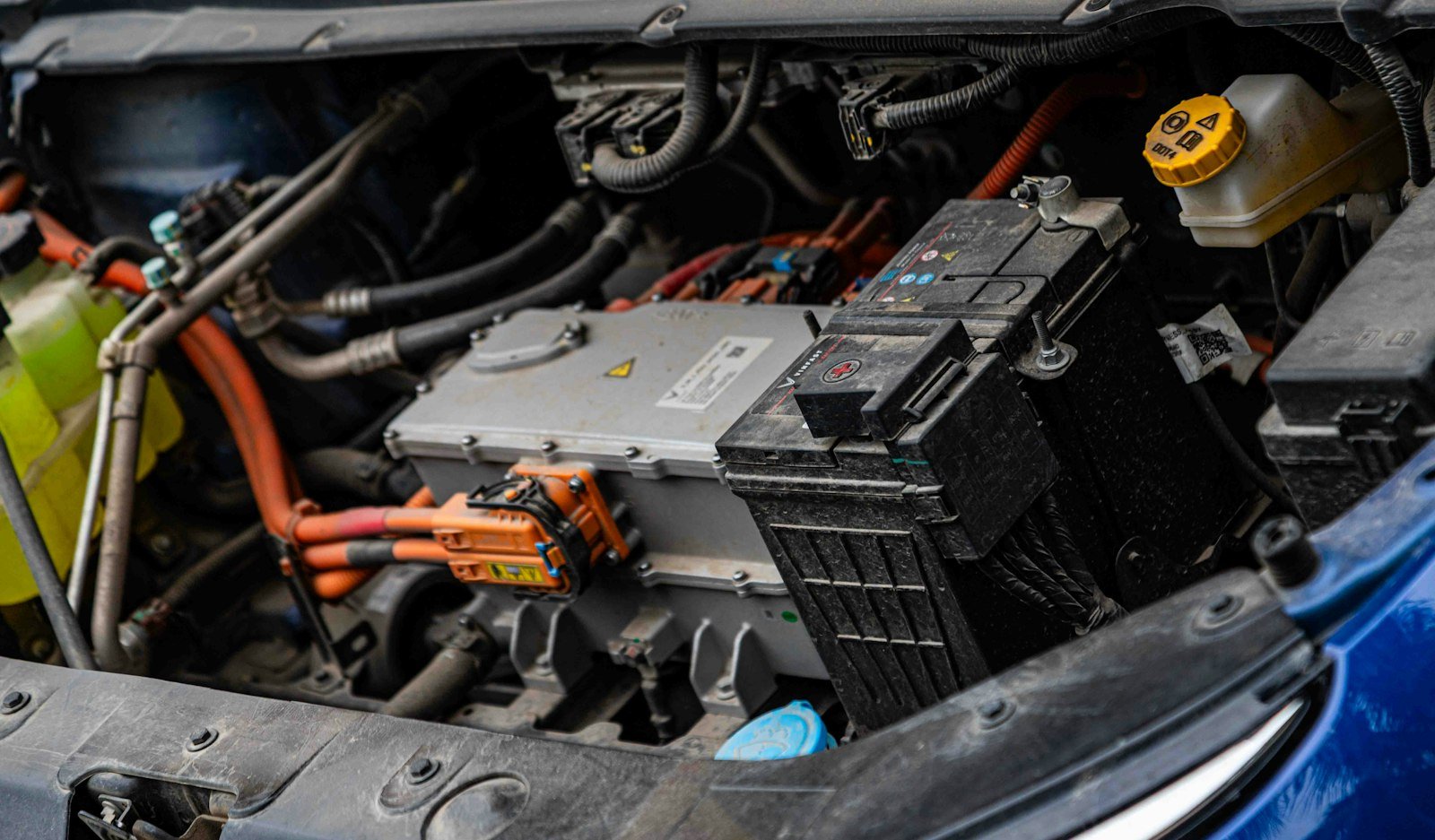
Hybrids and electric cars also carry a small 12-volt battery that powers the locks, screens and control units and wakes up the high-voltage system. It does not start an engine, so it is spared the heaviest load, but it can still go flat and stop the car from switching on. It ages in the same way, and its life depends on the same habits.
The large traction battery is a separate subject with its own warranty, set out in the manufacturer’s documents. More topics on fluids, servicing and faults are in our Maintenance section.
