
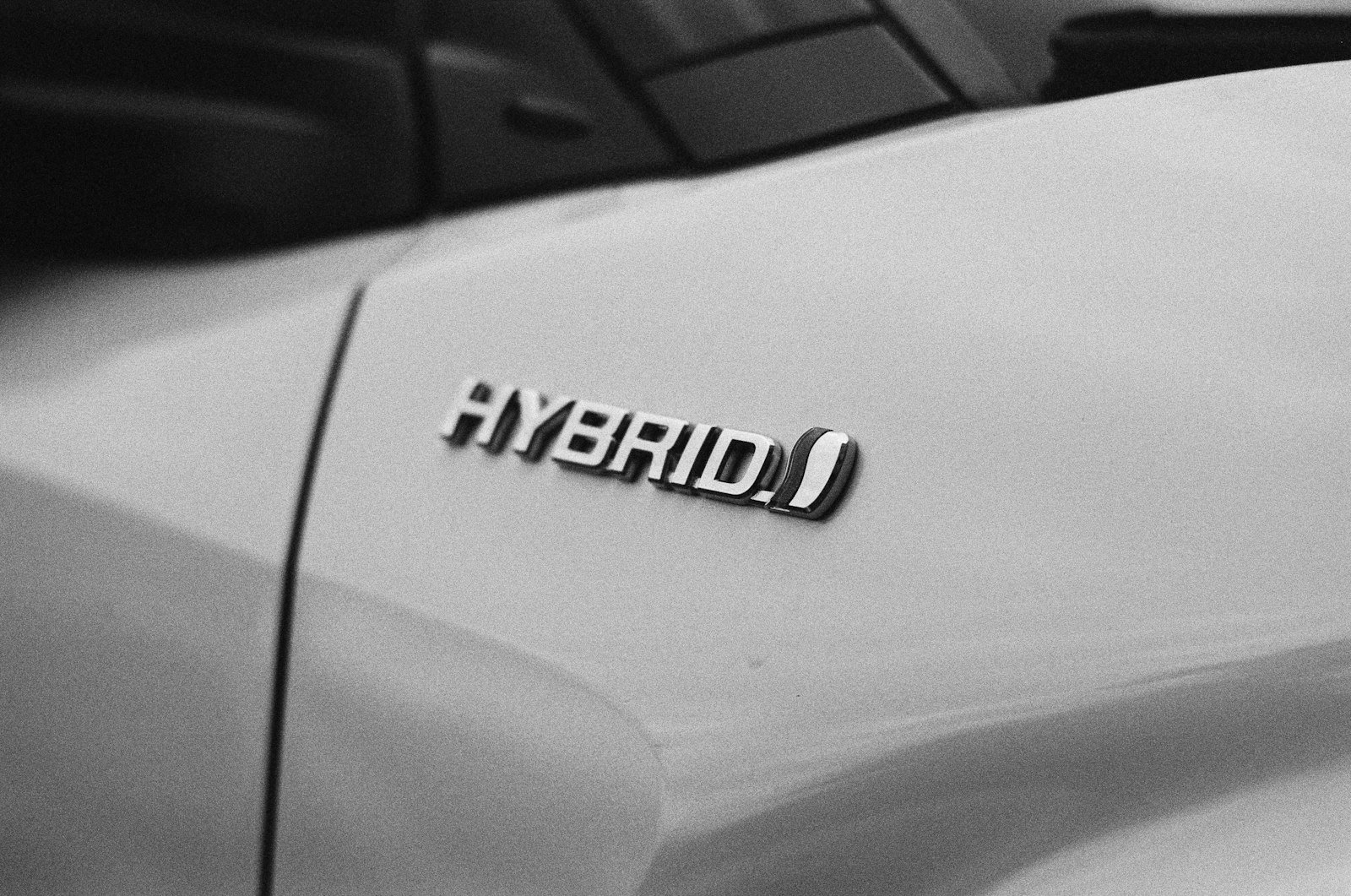
How does a hybrid car work? Mild, full and plug-in hybrids explained

How does a hybrid car work? It pairs a petrol (sometimes diesel) engine with one or more electric motors and a battery, and a computer decides from one second to the next which of them drives the wheels. The aim is simple: let the engine work only when it is efficient, and recover the energy a normal car throws away as heat every time it slows down. Behind the single word “hybrid”, though, sit three very different systems, and the badge on the boot rarely tells you which one you have.
In short
| Mild hybrid (MHEV) | Full hybrid (HEV, “self-charging”) | Plug-in hybrid (PHEV) | |
|---|---|---|---|
| Can it drive on electricity alone? | No | Yes, slowly and over short distances | Yes, over a useful distance on a full charge |
| How the battery is charged | Braking and the engine | Braking and the engine | A charging cable, plus braking and the engine |
| Size of the battery | Small | Medium | Large |
| Where it saves the most fuel | A little everywhere | Town and stop-start traffic | Short journeys after charging |
| Where it saves the least | Motorways | Steady motorway driving | Long trips with a flat battery |
The parts every hybrid shares
Whatever the type, the same building blocks come back under the bonnet:
- The combustion engine, usually petrol, which still provides most of the energy on a long journey.
- The electric motor, often called a motor-generator because it works both ways: it drives the wheels when fed with current, and turns into a generator that produces current when the wheels turn it.
- The traction battery, the high-voltage battery that powers the motor. It has nothing to do with the ordinary 12-volt battery, which every hybrid still has for the lights, the locks and the computers.
- The power electronics: an inverter that turns the battery’s direct current into the alternating current the motor uses, and back again, plus a converter that keeps the 12-volt battery charged.
- The control unit, which reads the accelerator, the speed and the battery’s charge, and decides how to share the work.
The thick orange cables you may spot in the engine bay carry the high voltage between these parts. Orange is the industry’s warning colour: you never unplug or cut them.
Regenerative braking: the trick behind every hybrid
In a conventional car, braking turns the car’s movement into heat in the discs and pads, and that energy is lost. A hybrid recovers part of it. When you lift off or press the brake pedal gently, the motor switches to generator mode, the wheels drive it, and the resistance it creates slows the car while sending current back into the battery. This is regenerative braking.
The friction brakes are still there and take over for firm stops or at very low speed. The car blends the two automatically, which is why the brake pedal on some hybrids feels a little different from a conventional car’s for the first few days.
The energy recovered is then spent helping the car pull away, which is precisely when an engine burns the most fuel for the least distance. That is where most of the saving comes from: a hybrid recycles the energy of the last stop to get through the next start.
Mild hybrid: an assistant, not a second engine
A mild hybrid replaces the alternator and starter with a single, beefier starter-generator, usually driven by the engine’s auxiliary belt, and adds a small battery, most often running at 48 volts. It recovers energy when slowing down, restarts the engine smoothly for stop-start, lets the engine switch off while coasting on some models, and gives a short boost when you accelerate.
What it cannot do is move the car on electricity alone. From the driver’s seat it feels like a normal petrol or diesel car, often with a manual or conventional automatic gearbox, which suits drivers who want no change in habits. The fuel saving is real but modest, and it shrinks on steady motorway runs where there is little braking to recover.
Full hybrid: the computer shares the work
A full hybrid, sold in the UK as a “self-charging hybrid”, has a bigger motor and battery. It can set off and creep along on electricity alone, in a car park or a queue, then wake the engine silently when more power is needed. You never plug it in: all its electricity comes from braking and from the engine itself.
Manufacturers link the engine, motors and wheels in three main ways:
- Power-split: a planetary gear set, a compact set of gears that can mix two inputs, combines the engine and two motor-generators. There is no conventional gearbox, and the car behaves like a continuously variable automatic. On hard acceleration the engine revs rise and stay high while the speed catches up, the “elastic band” feeling some drivers dislike.
- Series-parallel: the engine mostly drives a generator that feeds the electric motor, so the wheels are driven electrically most of the time. At steady cruising speed a clutch locks the engine directly to the wheels, because that is more efficient at that point.
- Parallel: the motor sits between the engine and a normal automatic gearbox. It feels the most like a conventional car, gear changes included.
In all three, what you notice is the same: silence when pulling away, the engine starting and stopping on its own, and an energy display showing arrows between the engine, the battery and the wheels. Once warmed up, a full hybrid shines in town and in stop-start traffic, where an ordinary car is at its worst.
Plug-in hybrid: an electric car for short trips
A plug-in hybrid carries a much bigger battery that you charge from a home wallbox, a public charge point or, slowly, a three-pin socket. On a full charge it can cover a commute or the school run without starting the engine, then behave like a full hybrid once the battery is down to its reserve.
Its official electric range, measured under the WLTP test (the standard laboratory cycle used for new cars), is printed in the car’s brochure and specification; expect less in winter, at motorway speeds or with the heating on full. Everything depends on charging: driven daily on short trips and plugged in every night, a plug-in hybrid uses very little fuel. Never charged, it becomes a heavy petrol car carrying a flat battery, and can use more fuel than the non-hybrid version of the same model.
A worked example
Say your car’s specification lists an electric range of 40 miles, and you knock 20% off for real-world driving in cold weather: that leaves about 32 miles. With a 12-mile commute each way, 24 miles a day, you can do the whole working week on electricity as long as you charge each night. Add a 150-mile weekend trip and the engine will cover roughly 118 of those miles, at the fuel consumption of a heavy full hybrid. Check the range figure for your own model, then repeat the sum with your real journeys before choosing.
How to tell which hybrid you have
- A charging flap in addition to the fuel filler: plug-in hybrid.
- An EV or “electric” mode button and silent starts, with no charging flap: full hybrid.
- No electric-only driving at all, often a “48V” or “mild hybrid” mention in the specification or handbook: mild hybrid.
The handbook remains the reference: it names the system and gives the servicing schedule that goes with it. Other electrified-car topics are covered in our Technology section.
What a hybrid changes for servicing
The engine still needs looking after. Oil, oil filter, air filter, spark plugs, coolant: the combustion engine is serviced on its own schedule, given in the service book. A hybrid’s engine starts and stops far more often and, on a plug-in used for short trips, may run only occasionally and rarely reach full temperature. Respect the time interval as well as the mileage one, and check the oil level like on any car.
The brakes wear more slowly, but can seize. Since regenerative braking does much of the slowing down, pads last longer. The flip side is that discs which are rarely used firmly gather rust and the sliding pins of the calipers can stick. Firm braking from time to time, where it is safe, keeps the discs clean; a grinding noise or uneven braking deserves a look at the next service.
The 12-volt battery can still go flat. If it does, the high-voltage system will not wake up and the car will not “start”, even with a full traction battery. Our guide on how long a car battery lasts applies to hybrids too.
The high-voltage system is for trained technicians only. Checking the levels, the tyres, the wiper blades and the 12-volt battery voltage is fine for anyone. Anything that touches the orange cables, the inverter or the traction battery is not, because these circuits carry several hundred volts on most full and plug-in hybrids and can stay live after the engine stops. Make sure the garage that services your car has technicians qualified to work on high-voltage vehicles.
Warning lights mean the same thing. A hybrid system fault usually shows as a message or a dedicated warning, alongside the familiar ones. The amber engine light keeps its meaning, as explained in our article on the engine warning light.
