
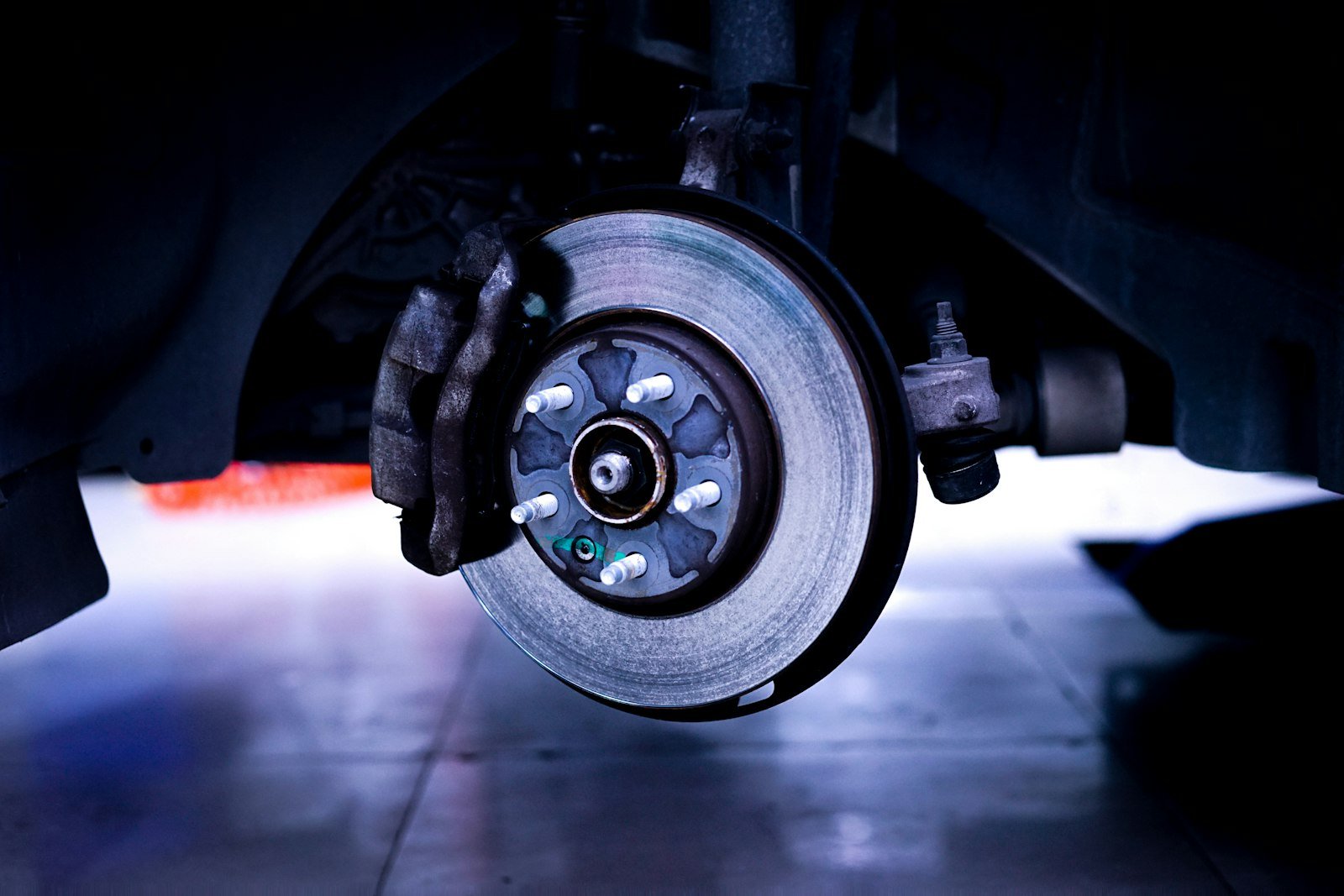
How long do brake pads last? Signs of wear and when to replace them

How long do brake pads last? Most UK motoring guides quote somewhere between 30,000 and 70,000 miles, and that gap is the whole story: the same pads can be finished in two years of school runs or still be half full after five years of motorway commuting. Mileage alone will never tell you when yours are due. What the car shows, sounds like and measures will.
In short
| Question | Short answer |
|---|---|
| Usual lifespan | Roughly 30,000 to 70,000 miles, the range most UK motoring guides quote in 2026. Town driving sits at the bottom, motorway driving at the top |
| Front or rear first? | Usually the front, because it does most of the braking |
| When to replace | Around 3mm of friction material left is the usual workshop point. Below 1.5mm is a dangerous defect at the MOT |
| Warning signs | Pad wear light, high-pitched squeal when braking, metallic grinding, longer stops, car pulling to one side |
| What shortens their life | Stop-start town traffic, late and hard braking, heavy loads and towing, sticking calipers |
| What you can check yourself | Look at the outer pad through the wheel spokes, listen, watch the dashboard |
| What needs a garage | Measuring both pads properly, and fitting new ones unless you are an experienced DIYer: a mistake here costs you your brakes |
What a brake pad is and why it wears
Each wheel with a disc brake has a disc (the steel plate that turns with the wheel), a caliper (the clamp that sits over it) and two pads, one on each side of the disc. A pad is a steel backing plate with a block of friction material bonded to it. When you press the pedal, brake fluid pushes the caliper’s piston and the pads squeeze the disc.
That friction turns the car’s speed into heat, and every stop takes a thin layer off the pads. They are designed to wear so the disc does not have to: a pad is cheap and quick to change, a disc much less so. When the friction material runs out, the steel backing plate meets the disc, and that is where a simple pad change turns into a pads-and-discs job.
The front pads usually go first. When you brake, the car’s weight shifts forward, so the front wheels do most of the stopping. It is common to replace front pads two or three times while the rears carry on.
How long brake pads last, and why the range is so wide
The 30,000 to 70,000 mile range is only a starting point. Where your car lands within it depends on a handful of factors you can actually assess.
Where you drive. Town driving means a stop at every junction, roundabout and set of lights. Motorway driving can mean fifty miles without touching the pedal. A queue on the motorway is the exception: repeated stops from higher speeds are hard work for pads.
How you brake. Braking late and hard, then accelerating again, burns through pads far quicker than lifting off early and letting the car slow down before a gentle stop. Anticipation is the cheapest way to make pads last.
Weight. A car with five people and a full boot, or one towing a caravan, needs more braking force to stop in the same distance. Heavier cars such as large SUVs wear pads faster for the same reason.
The pads themselves. Pads differ in their friction material. Organic pads are quiet and gentle on discs but wear sooner, semi-metallic pads last longer but can be noisier and harder on discs, and ceramic pads are usually the longest-lived and the cleanest, at a higher price. On a normal road car, the right choice is the type and grade specified for your car, not the hardest-wearing one on the shelf.
Hybrids and electric cars. Regenerative braking, where the electric motor slows the car and recovers energy into the battery, does much of the work the pads would otherwise do, so pads often last a long time. The catch is that discs and pads that are rarely used hard can corrode and stick, so they still need inspecting. The way regeneration works is explained in our guide on how a hybrid car works.
A fault in the system. A sticking caliper (a piston or slide pin that no longer moves freely) keeps one pad rubbing against the disc. The result is a set of pads worn unevenly, often with one pad nearly gone while its partner looks healthy. If one wheel smells hot after a drive or the car pulls to one side, have it checked.
The signs your brake pads are wearing out
A warning light on the dashboard
Many cars have a pad wear sensor, a small wire embedded in the pad: when the friction material wears down to it, the circuit changes and a light comes on. The symbol is usually an amber circle with dashed lines on each side, and some cars show a message instead. Not every car has a sensor, and some only have one on a single wheel, so a dark dashboard does not prove your pads are fine. If you are not sure what a symbol means, our guide to dashboard warning lights covers the main ones.
A red brake warning light is a different matter: it usually points to low brake fluid, the parking brake still on, or a fault in the braking system. Low fluid can itself be a sign of very worn pads, because the caliper pistons move further out as the pads get thinner and draw more fluid from the reservoir.
A squeal, then a grind
Many pads carry a small metal tab, the acoustic wear indicator, that touches the disc when the pad is getting thin and makes a high-pitched squeal when you brake. It is designed to be annoying so that you book the car in.
A deep metallic grinding is the next stage: the steel backing plate is touching the disc. Stop driving the car if you can, because braking is weaker and the disc is being cut with every stop.
A light squeal on the first few stops of a damp morning, which disappears after a mile, is usually surface rust being scraped off the discs, not worn pads.
The car stops differently
A longer stopping distance, a pedal that feels softer or travels further, the car pulling to one side under braking or a vibration through the pedal or steering wheel all deserve a look. Vibration usually comes from discs worn unevenly rather than from the pads themselves.
How to check your brake pads
On many cars with alloy wheels you can see the outer pad through the spokes, with the wheel on. Turn the steering on full lock for the front wheels, use a torch and look at the caliper: the pad is the block pressed against the disc. You want to see a clear layer of friction material on top of the steel backing plate.
This is a quick screen, not a measurement. You only see the outer pad, the backing plate is easy to mistake for friction material, and the inner pad, which often wears faster, is hidden. A proper check means taking the wheel off, which a garage does at each service.
Most workshops recommend replacing pads at around 3mm of friction material. Below that, the pad has less material to absorb heat and the margin before metal touches the disc is small.
Estimating how many miles are left
If your service invoices note pad thickness, you can work out a rough wear rate. Take an example: the front pads measured 7mm at one service and 4mm at the next, 12,000 miles later.
- Wear: 7 − 4 = 3mm over 12,000 miles, so 0.25mm every 1,000 miles.
- Margin before the usual 3mm replacement point: 4 − 3 = 1mm.
- Miles left: 1 ÷ 0.25 × 1,000 = about 4,000 miles.
The estimate holds only if your driving stays the same. A move from motorway commuting to town driving, or a summer of towing, shortens it.
Brake pads and the MOT
Brake pads are inspected at the MOT. According to the DVSA MOT inspection manual for cars (page updated 14 October 2026):
- a pad worn down to its wear indicator is a major defect, so the car fails;
- a pad worn below 1.5mm is a dangerous defect, and you should not drive the car away until it is repaired;
- a pad contaminated with oil or grease is a major defect, and a missing or incorrectly fitted pad is dangerous;
- an illuminated brake pad wear warning light is not, on its own, a reason for failure.
The tester often sees the pads only through the wheel, without removing it, so a pass does not mean they will last another year. If the tester notes pads as “worn” in the advisories, they are close to the end.
Discs are also inspected. A disc that is significantly and obviously worn is a major defect, and one that is cracked or likely to fail is dangerous. The manufacturer publishes a minimum thickness for each disc, often stamped on the disc’s edge, and a garage measures it with a micrometer.
Replacing brake pads: what you can and cannot do yourself
Checking pads through the wheel, listening for noises and keeping an eye on the brake fluid level are within anyone’s reach.
Changing pads is a job for an experienced DIYer with axle stands, a torque wrench and the manufacturer’s torque figures. Some cars need a diagnostic tool to wind back an electronic parking brake before the rear pads can be changed. A badly seated pad, a loose caliper bolt or air in the brake fluid can leave you without brakes, so if you have any doubt, leave it to a garage.
Pads are always replaced in pairs on the same axle, both front wheels or both rear wheels, so the car brakes evenly. New discs always get new pads. New pads also need bedding in: for the first few days, brake progressively and avoid harsh stops so the pad surface matches the disc. Follow the fitter’s advice for your pads.
