
Tyre pressure warning light: what it means and how to reset it

The tyre pressure warning light is the amber symbol shaped like a tyre cross-section, a flat-bottomed horseshoe with an exclamation mark inside. It comes on when the car thinks at least one tyre has lost air, but it can also mean the system itself has a fault, or simply that nobody reset it after the last top-up. Whether it is steady or flashing, and what kind of system your car uses, tells you which case you are in.
In short
| What you see | What it usually means | What to do |
|---|---|---|
| Light comes on with the ignition, then goes out | Normal self-check | Nothing |
| Steady light while driving | One or more tyres below the threshold set by the maker | Slow down, stop somewhere safe, look at all four tyres, check pressures with a gauge |
| Steady light on the first cold morning | Air contracts in the cold, pressures were already borderline | Check cold and inflate to the handbook figure, then reset if your car needs it |
| Light stays on after inflating | System not reset, a slow puncture, or a sensor fault | Follow the reset in the handbook, recheck the pressures the next day |
| Light flashes for about a minute, then stays on | System fault (sensor, battery, receiver) | Pressures still need checking by hand; have the system diagnosed |
| Light on at the MOT (car first used from 1 January 2012) | Malfunctioning TPMS is a major defect | Fix it before the test |
What the warning light is telling you
The light belongs to the TPMS, the tyre pressure monitoring system, which watches the tyres and alerts you when one loses air. EU rules made it compulsory on new car models from November 2012 and on all new passenger cars sold from November 2014, so almost every car registered in the UK since then has one.
It is a warning, not a gauge. Manufacturers set the alert well below the recommended pressure: Toyota, for example, explains that its light reacts to a deflation of roughly 20 to 25%.
Take a car whose door pillar sticker asks for 2.3 bar (33 PSI). A 25% loss brings it to about 1.7 bar (25 PSI) before anything shows on the dashboard. By then the tyre is visibly soft, it heats up more, wears its shoulders and lengthens your braking in the wet.
So a dark light does not mean your pressures are right. It only means none of them has fallen far enough to trip the alarm. The figure for your car, and how to check it, is in our guide on what your tyre pressure should be.
Direct or indirect TPMS: why it matters
There are two ways of doing the job, and the difference changes what you do when the light comes on.
Direct systems
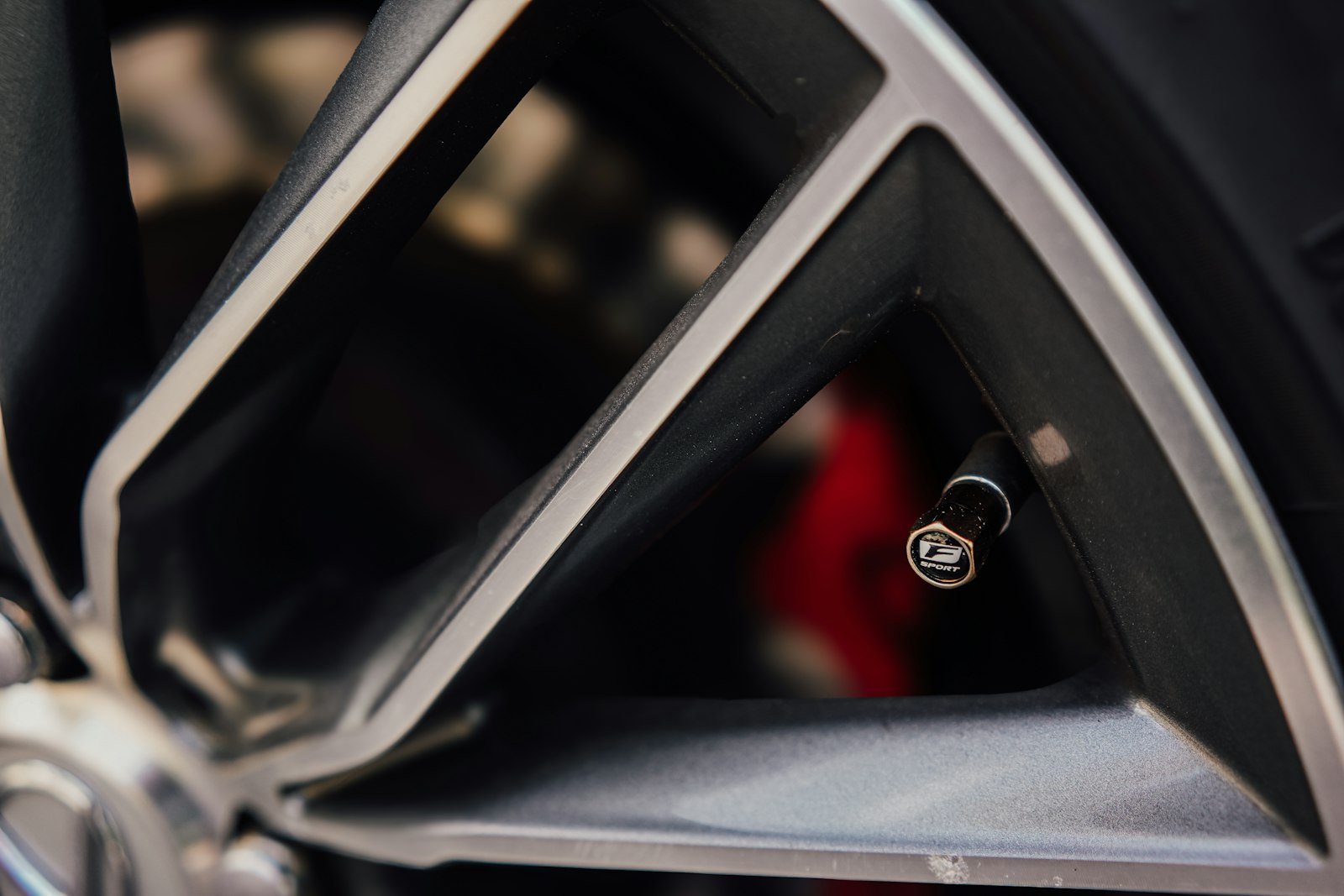
A direct TPMS has a small sensor inside each wheel, usually built onto the back of the tyre valve. It measures the actual pressure and often temperature, and sends them by radio to a receiver in the car. Many cars with a direct system can show the pressure of each tyre on the dashboard screen, which tells you straight away which one is low.
Each sensor runs on a sealed battery that cannot be changed on its own. Manufacturers and tyre specialists commonly quote a life of around ten years; when it runs down, the sensor is replaced as a unit, and the system shows a fault.
Indirect systems
An indirect TPMS has no sensor in the tyre. It uses the wheel speed sensors of the ABS, the anti-lock braking system, which already count how fast each wheel turns. A soft tyre has a slightly smaller rolling diameter, so it spins a little faster than the others, and the car’s computer notices the difference.
An indirect system has to learn what “correct” looks like. That is why it must be reset after you change the pressures or fit new tyres, and why it can be fooled: four tyres losing air at the same rate in the cold keep turning at the same speed, and uneven wear can look like a soft tyre. If your car never shows individual pressures, it is very likely indirect. The handbook says which one you have.
What to do when the light comes on while driving
Do not brake hard or swerve. Ease off, keep a steady line and find a safe place to stop: a lay-by, a services or a car park, never the hard shoulder of a motorway for a simple check.
Walk round the car and look at all four tyres, including the insides. A tyre that is visibly flat, has a bulge on the sidewall, or has a nail or screw in the tread changes the plan: fit the spare or use the repair kit as the handbook describes, or call your breakdown service. A tyre driven flat even for a few miles can be damaged inside beyond repair.
If all four look normal, drive gently to the nearest place where you can check pressures with a gauge, and inflate each tyre to the figure on the door pillar, fuel flap or handbook. Use the figure for your load: many cars give a higher pressure for a full car or a long motorway trip.
Why the light comes on in cold weather
At the workshop, the first frosty week of autumn always brought a queue of cars with the same amber light. Nothing was punctured: the air in the tyres had simply cooled.
Air pressure follows temperature, so work it through on the 2.3 bar tyre: inflated in a 20 °C garage, it holds about 3.3 bar in absolute terms, the gauge figure plus the 1 bar of the atmosphere around us. Cool it to 0 °C and that absolute pressure falls by about 7%, to roughly 3.07 bar, so the gauge now reads about 2.07 bar. That is a loss of around 0.1 bar for every 10 °C. A tyre that was already a little low in summer can cross the warning threshold on the first cold night.
The fix is to check and inflate with the tyres cold, after the car has stood for a few hours, not after a long drive. Warm tyres read higher and you would end up under-inflating them.
Light still on after inflating: how to reset it
Many cars clear the warning on their own after a few minutes of driving once the pressures are right. Others need you to tell them. The exact procedure is in the handbook, under tyres or TPMS, and it usually takes one of two forms:
- A button, often low on the dashboard or near the steering column. With the ignition on, hold it until the light flashes, then release.
- A menu on the instrument cluster or touchscreen, under vehicle settings or tyres, with an option to reset or “save” the pressures.
Inflate all four tyres to the right pressure before resetting. With an indirect system this matters even more, because the reset stores the current state as the new normal: reset it with one soft tyre and the system will consider that soft tyre correct. After the reset, most systems need a period of normal driving to finish calibrating, typically several minutes at a steady speed. Your handbook gives the figure for your car.
If the light comes back within a day or two, the tyre that set it off is losing air. A slow puncture, a leaking valve or a poor seal between tyre and rim can each drop a few PSI a week. Check that tyre first, and keep an eye on its pressure every few days until it is repaired.
Flashing light: a fault in the system
A light that flashes for about a minute when you start the car, then stays lit, is the usual sign that the TPMS itself has a problem rather than a tyre. The DVSA’s MOT inspection manual describes the same pattern: in the event of a malfunction, the lamp may flash a number of times and then remain on.
The usual causes on a direct system are a sensor battery at the end of its life, a sensor damaged during a tyre change, a corroded valve, or a replacement wheel fitted without sensors or without the sensors being registered to the car. On an indirect system it is more often a wheel speed sensor problem, which may also bring on the ABS light.
Until it is repaired, the car is not watching your tyres at all. Check the pressures yourself every week, and see a tyre specialist or garage with a TPMS diagnostic tool, which can read each sensor and show which one is silent. If other amber lights appear at the same time, our guide to dashboard warning lights explains what each one means.
The TPMS and the MOT
As of November 2026, the DVSA’s MOT inspection manual checks the TPMS on passenger cars first used on or after 1 January 2012. The tester switches on the ignition and watches the lamp: it should light up and then go out.
A tyre pressure monitoring system that is “malfunctioning or obviously not working” is a major defect, which means a fail. If the lamp stays on because the system has recorded a pressure loss rather than a fault, the tester may not be able to tell the difference and can add an advisory. The simple rule is to make sure the light is out before the test: correct pressures, a proper reset, and any faulty sensor replaced beforehand.
Driving with the light on is not an offence in itself, but you remain responsible for the tyres. A tyre in a dangerous condition can bring a fine, penalty points and an MOT failure regardless of the TPMS. Our page on legal tyre tread depth covers those rules.
What you can do yourself, and what needs a garage
Checking and adjusting pressures with a reliable gauge, looking for nails and damage, and following the reset procedure in the handbook are jobs for any driver. Fitting the spare on a safe, level spot is fine for a confident one.
Replacing a direct TPMS sensor means breaking the tyre off the rim, fitting the new valve and sensor at the right torque, and registering its identity with the car using a diagnostic tool, so it belongs with a tyre specialist. Ask them to check the sensors and fit new valve seals each time new tyres go on: a sensor that is due to fail is far cheaper to replace while the tyre is already off the wheel. More tyre and braking topics are in our Safety section.
